


Home / AvoidImpostersToolkit
Home / AvoidImpostersToolkit
Official websites use .gov
A .gov website belongs to an official government organization in the United States.
Secure .gov websites use HTTPS
A lock () or https:// means you’ve safely connected to the .gov website. Share sensitive information only on official, secure websites.


HHS Administration for Community Living websites devoted to supporting Elder Justice.
The Government will never demand money, make threats, tell you to transfer money or withdraw cash. If you've been targeted by a scam like this, report it at ReportFraud.ftc.gov.
World Elder Abuse Awareness Day (WEAAD) is June 15. This year, join government agencies, businesses, and organizations across the country to help raise awareness about how to recognize and avoid imposter scams.
This toolkit has information and materials to help you spread the word. Please use and promote the campaign’s hashtags (#StopGovImposters and #StopBizImposters) and other materials beginning June 15 through June 26.
Learn more:
Use #StopGovImposters to share the following posts, graphics, and what you’re doing to fight imposter scams with others.
Social Media Post: We’re joining government agencies and organizations across the country to raise awareness about imposter scams. Learn the signs of an imposter scam so you can avoid them. #StopGovImposters ejcc.acl.gov/imposters
Graphic:
Social Media Post: Did you see or experience an imposter scam? Report it at ReportFraud.ftc.gov. Your report makes a difference. #StopGovImposters
Graphic:
Download (PNG | 43 KB)
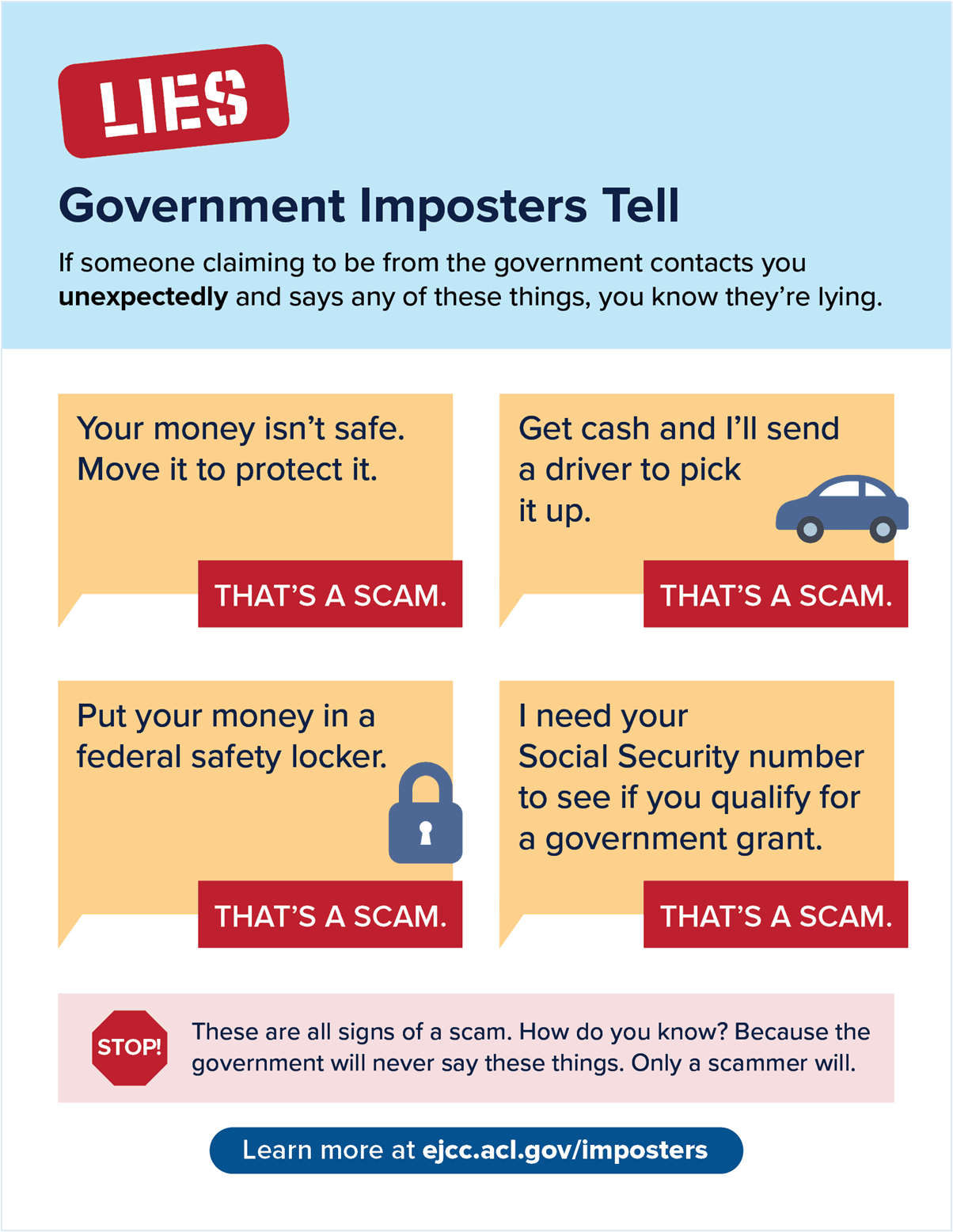
Social Media Post: If someone says they’re from the government and tells you to move your money or put it in a federal locker, that’s an imposter scam. No one from the government will ever tell you that your money isn’t safe and you must move it to “protect it.” Only a scammer will. #StopGovImposters ejcc.acl.gov/imposters
Graphic: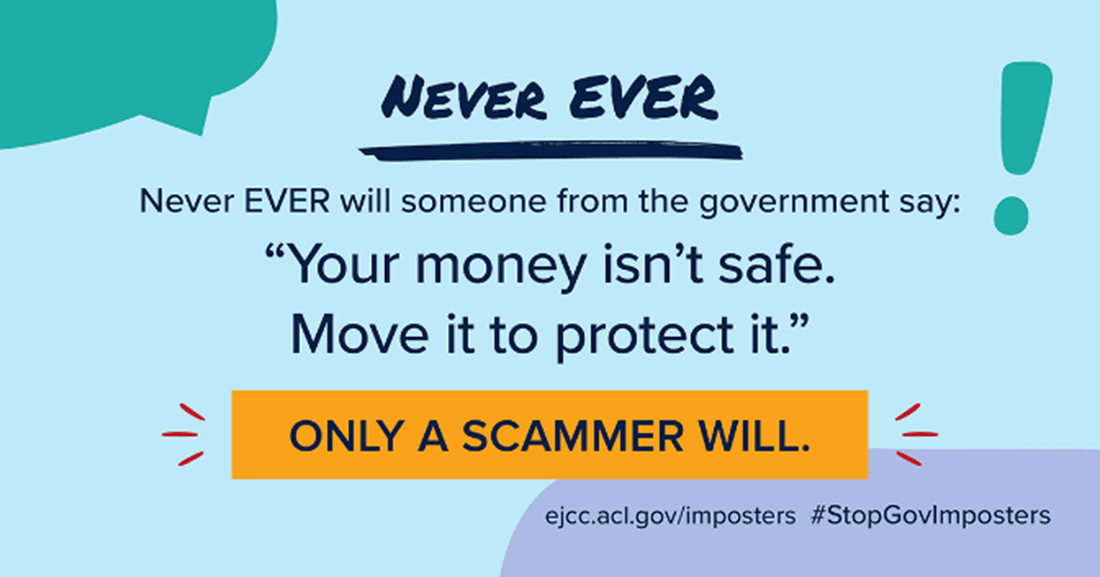
Download (PNG | 54 KB)
Social Media Post: Did someone call, text, or email and say you have to pay the government immediately, in a specific way, or you’ll be in trouble? That’s a government imposter. No one from the government will ever demand payment only with gift cards, wire transfers, cryptocurrency, or a payment app. Only a scammer will. #StopGovImposters ejcc.acl.gov/imposters
Graphic: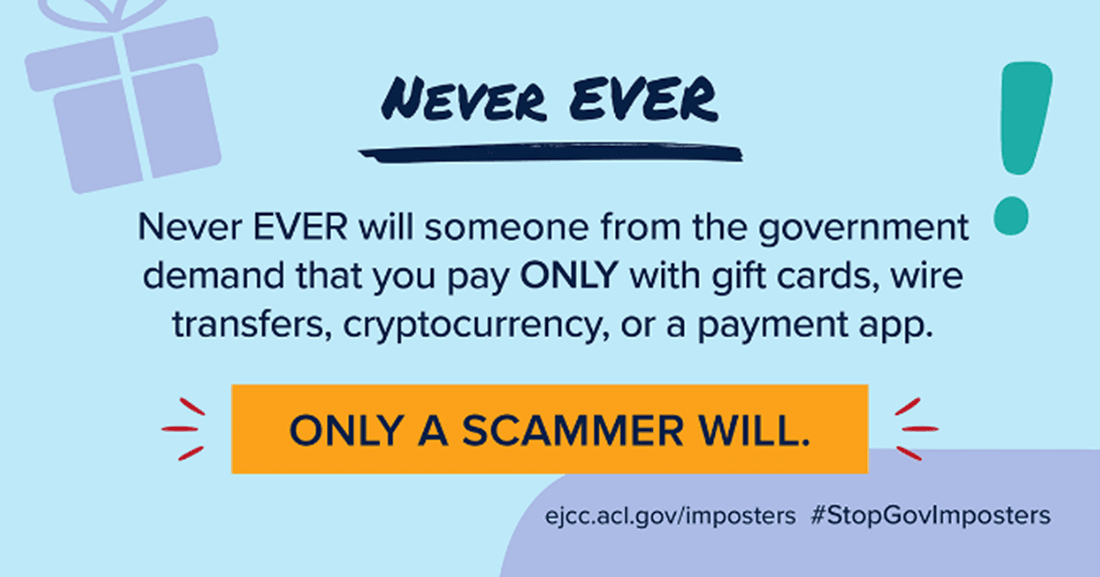
Download (PNG | 69 KB)
Social Media Post: Did you get a call, email, or text message saying you might be eligible for a government grant or program? Nobody from the government will ever get in touch to demand your Social Security number to see if you qualify. Only a scammer will. #StopGovImposters ejcc.acl.gov/imposters
Graphic: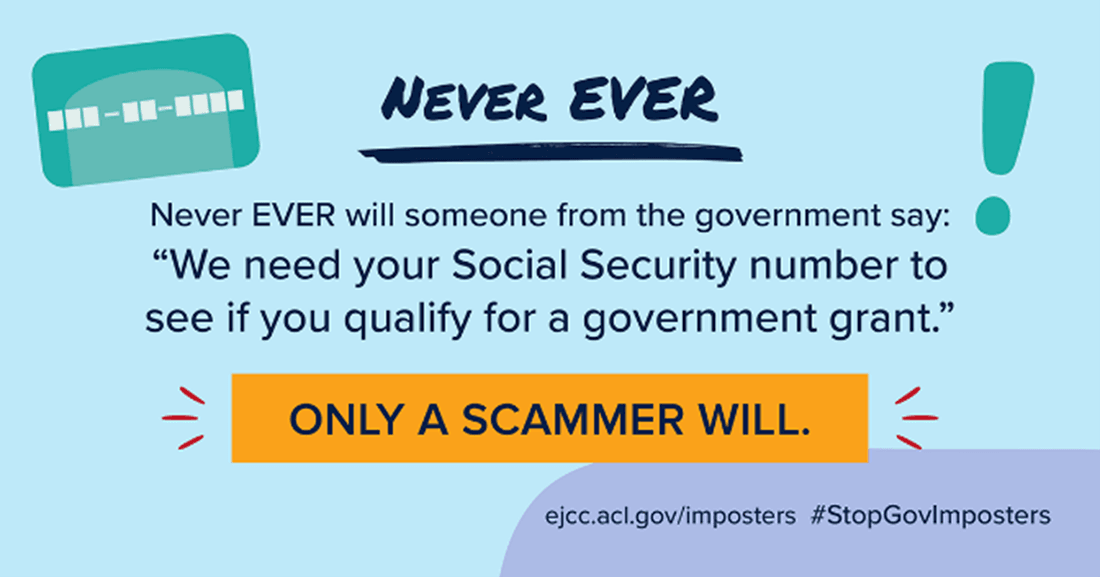
Add this blurb to a local newsletter, post it on your website, or email it to friends and community members.
This World Elder Abuse Awareness Day, join government agencies and organizations nationwide to spread the word about imposter scams. These scammers pretend to be someone they’re not — including government agencies and well-known businesses — to trick you into giving them money, access to your financial accounts, or your personal information. Learn how to avoid these scams, and help spread the word, by joining the Elder Justice Coordinating Council’s Never EVER campaign. More at ejcc.acl.gov/imposters.
Use this article as a blog post, newsletter article, or community post.
Do you know how to spot a government imposter?
This World Elder Abuse Awareness Day, join the Elder Justice Coordinating Council, government agencies, and organizations across the country to spread the word about government and business imposter scams.
Government imposter scams are a serious problem: in 2025, the FTC received more than 375,000 reports about government imposters, with reported losses of $917 million.
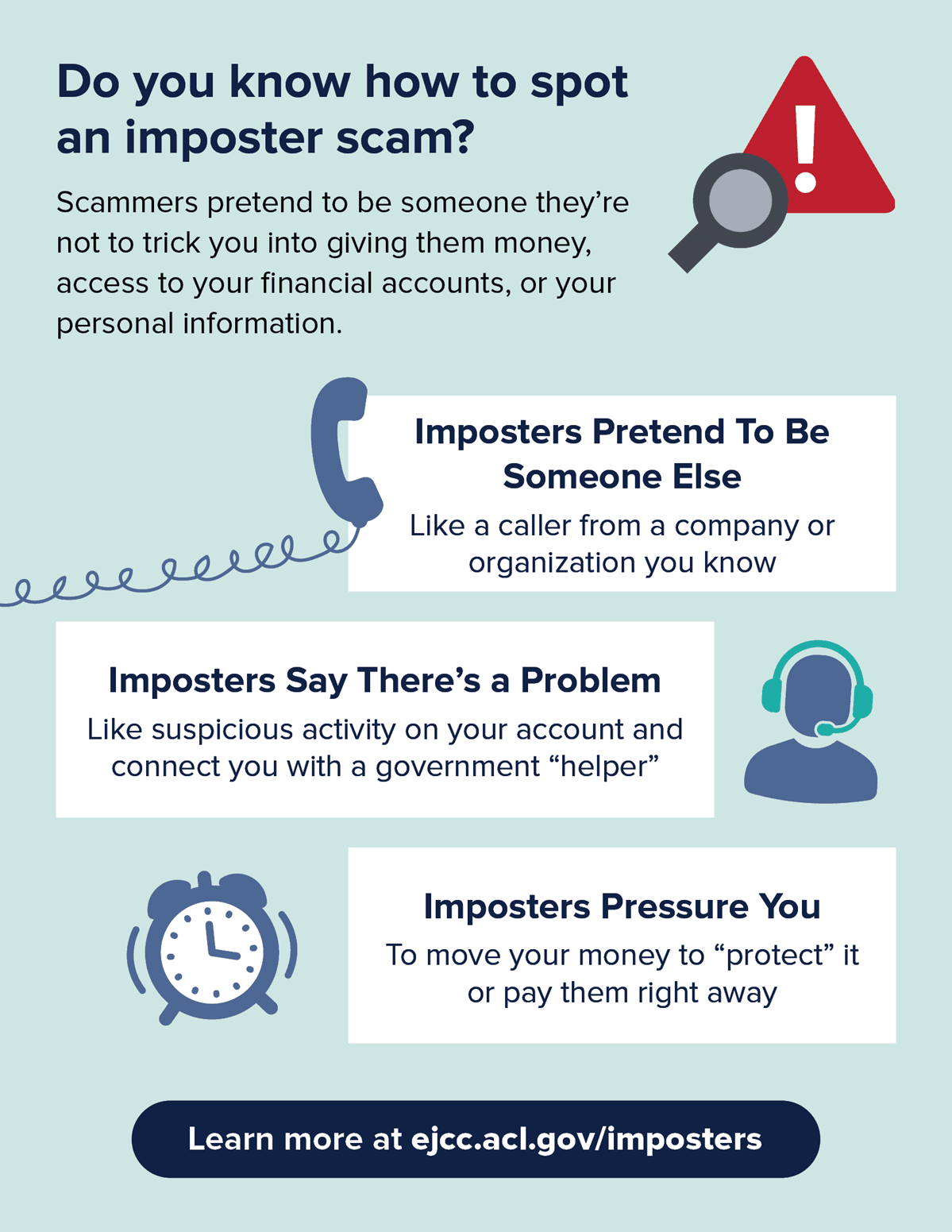
These imposter scammers lie and pretend to be someone they’re not. Their goal? Trick you into giving them money, access to your financial accounts, or your personal information. They make up complicated stories about so-called emergencies so you’ll panic and act quickly before you have time to think about what to do or talk to someone you trust.
One common scam starts with an unexpected call from someone who says they’re from a well-known business, saying there’s suspicious activity on your account.
To “help” you, they transfer you to someone who says they’re from the government. This so-called helper, who claims to be from the FBI, the FTC, or some other law enforcement agency, urges you to move your money to “protect it” — maybe by transferring it to an account they give you, depositing it in a “government account” or crypto ATM for “safekeeping,” or getting cash or gold and giving it to a courier. But it’s all a lie. No one from the government will ever ask you to do these things. Only scammers will.
Other lies might involve a “suspended Social Security number” or supposed eligibility for government benefits. In all cases, that scammer will go to great lengths to convince you they’re with the government: fake caller ID or official-looking letters, for example. The agency name might be real or made up (but real-sounding), and some scammers might show you an employee ID or badge — all to seem more real. But they’re not.
To recognize and avoid a government imposter, keep these things in mind:
Talk to someone you trust if you’re worried about a problem with your account or identity — especially if the stranger says they’re from the government or the situation is serious or involves a crime. Visit ejcc.acl.gov/imposters for more on imposter scams. And if you spot an imposter scam — or any other type of scam — report it at ReportFraud.ftc.gov.
Share these infographics on social media, print them out to post on a community bulletin board, or pass them out at community meetings or gatherings.
Last Modified: 04/22/2026